Discover Philippine UNESCO World Heritage sites and other places of outstanding cultural and natural value.
UNESCO Category
Region
Ilocos Sur · Ilocos Region
This northern city is the most intact example in Asia of a planned Spanish colonial town, established in the 16th century. Its architecture reflects the coming together of cultural elements from elsewhere in the Philippines and from China with those of Europe and Mexico to create a unique culture and townscape without parallels anywhere in East and South-East Asia.
Palawan · MIMAROPA
Spanning an area of almost 100,000 hectares of high-quality marine habitats at the Tubbataha and Jessie Beazley Reefs of the Sulu Sea, this natural park contains three atolls and a large area of deep sea. The property is home to an exceptional diversity of marine life, including whales, dolphins, sharks, turtles and Napoleon wrasse.
Ifugao · Cordillera Administrative Region
Living cultural landscape of highland rice terraces shaped over two millennia.
Davao Region
Forming a north-south running mountain ridge in the southeastern part of Mindanao island, this protected area provides critical habitats for a range of plant and animal speciaes across different elevations. The property provides a sanctuary to a host of globally threatened and endemic flora and fauna species, including critically endangered trees, plants and the iconic Philippine Eagle and Philippine Cockatoo.
MIMAROPA
This 22,202 ha property encompasses one of the world’s most impressive cave systems, featuring spectacular limestone karst landscapes, pristine natural beauty, and intact old-growth forests and distinctive wildlife. The protected area features an 8.2km long underground river that flows directly into the sea.
Western Visayas
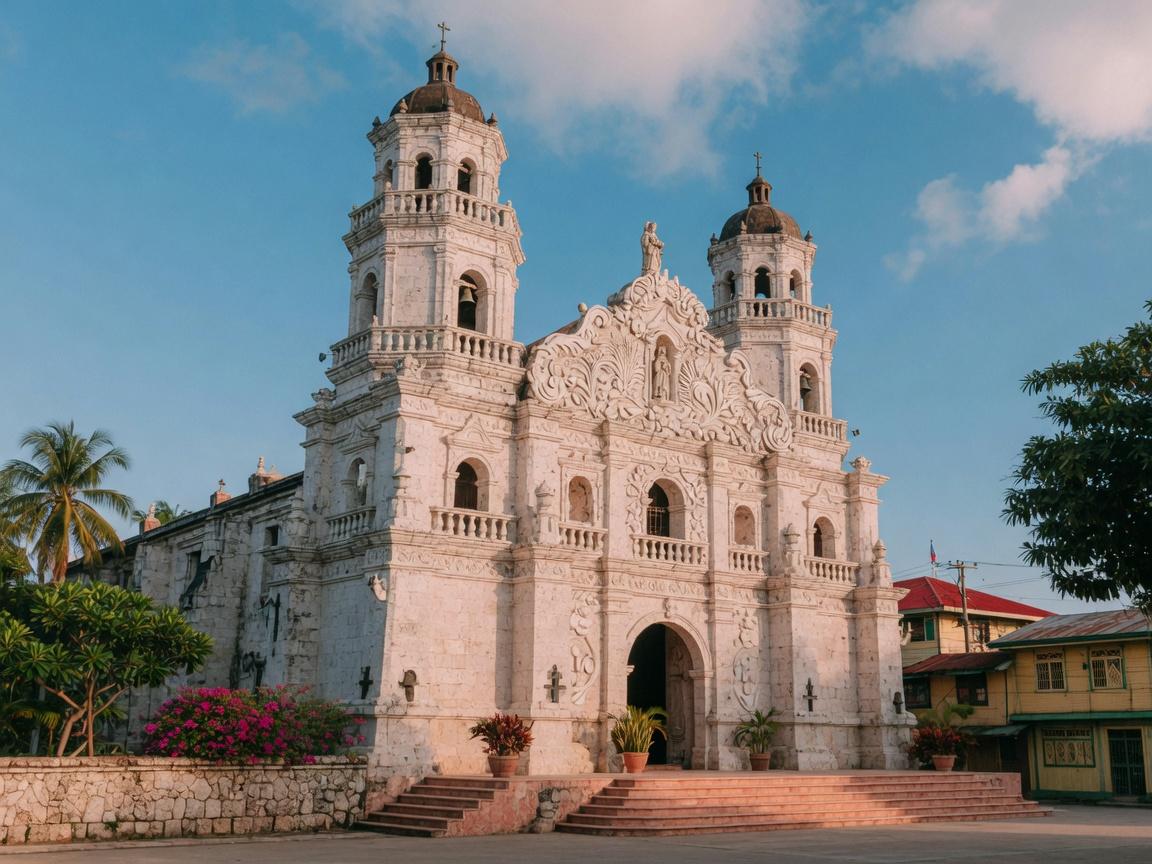
The Church stands on the highest point in the town of Miagao, Iloilo. The church's towers served as lookouts against Muslim raids and it is said to be the finest surviving example of 'Fortress Baroque'.
Ilocos Region
Unlike other town churches in the Philippines, which conform to the Spanish tradition of sitting on the central plaza, the Church with its Convento is on a hill surrounded by a defensive wall. Also unusual are the sitting of the Convento parallel to the facade of the church and that of the separate bell tower (characteristic of Philippine-Hispanic architecture) at the midpoint of the nave wall. This was dictated by the hill on which it is located.
National Capital Region
Also known as the Archdiocesan Shrine of Our Lady of Consolation and Cincture/Immaculate Conception Parish of San Agustin, was the first church built on the island of Luzon in 1571, immediately after the Spanish conquest of Manila. A site within the district of Intramuros was assigned to the Augustinian Order, the first to evangelize in the Philippines.