Discover Philippine UNESCO World Heritage sites and other places of outstanding cultural and natural value.
UNESCO Category
Region
Ilocos Sur · Ilocos Region
This northern city is the most intact example in Asia of a planned Spanish colonial town, established in the 16th century. Its architecture reflects the coming together of cultural elements from elsewhere in the Philippines and from China with those of Europe and Mexico to create a unique culture and townscape without parallels anywhere in East and South-East Asia.
Palawan · MIMAROPA
Spanning an area of almost 100,000 hectares of high-quality marine habitats at the Tubbataha and Jessie Beazley Reefs of the Sulu Sea, this natural park contains three atolls and a large area of deep sea. The property is home to an exceptional diversity of marine life, including whales, dolphins, sharks, turtles and Napoleon wrasse.
Ifugao · Cordillera Administrative Region
Living cultural landscape of highland rice terraces shaped over two millennia.
MIMAROPA
Making up the northern tip of Mindoro island, this 3,200 ha reserve features diverse ecosystems, including savannas and grasslands, dipterocarp forests, mossy forests, mangrove, coral reefs and coastal habitats as well as agroforestry systems. A wide variety of endemic species are present, including the tamaraw.
Davao Region
Forming a north-south running mountain ridge in the southeastern part of Mindanao island, this protected area provides critical habitats for a range of plant and animal speciaes across different elevations. The property provides a sanctuary to a host of globally threatened and endemic flora and fauna species, including critically endangered trees, plants and the iconic Philippine Eagle and Philippine Cockatoo.
This 22,202 ha property encompasses one of the world’s most impressive cave systems, featuring spectacular limestone karst landscapes, pristine natural beauty, and intact old-growth forests and distinctive wildlife. The protected area features an 8.2km long underground river that flows directly into the sea.
Cordillera Administrative Region
Designated as Creative City of Crafts and Folk Art in 2017, Baguio City initiate the development of Creative Centres dedicated to supporting crafts and folk art, offering workshops, studios, design laboratories, exhibit areas as well as open collaborative spaces for creators and the general public, thus strengthening Baguio’s creative ecosystem.
Cebu · Central Visayas
Designated as Creative City of Design in 2019, Cebu City is traditionally known for furniture, arts and crafts, and fashion design; it is generally considered to be the country’s design capital. Moreover, in recent years, Cebu has also become a global hub for multimedia arts and IT outsourcing. In 2008, Cebu was designated a British Council Creative City of Design and was the ASEAN City of Culture in 2015.
Iloilo · Western Visayas
Designated as Creative City of Gastronomy in 2023, Iloilo has a long-standing gastronomic tradition rooted in its inhabitants’ way of life and in the local culture of the “fiesta” and its festive banquets. The city actively supports its food industry in the belief that it is instrumental for its urban development.
Negros Island Region
Designated as Creative City of Literature in 2025, Dumaguete is renowned for the Silliman University National Writers Workshop, and celebrates festivals such as the DumaLit Festival. The city sustains a dynamic literary ecosystem that drives both its cultural and creative heritage with the support of the publishers, writers, and educators.
National Capital Region
Designated as Creative City of Film in 2025, Quezon City is home to the country’s movie production companies and media networks, earning the nickname “City of the Stars”. The city upholds its mandate to prioritize film workers’ safety in accordance with the Eddie Garcia Law and hosts the Quezon City International Film Festival to promote the creative freedom of the film workers.
Known as the Philippines’ “last ecological frontier,” the archipelagic province of Palawan is composed of a large main island and more than 1,700 smaller islands. It is endowed with rich natural resources and highly diverse flora and fauna found in both land and sea. Based on the IUCN classification, it has 105 out of the 475 threatened species in the Philippines.
Central Visayas
Bohol Island UNESCO Global Park
Bicol Region
This Biosphere Reserve is located in the southeastern part of Luzon island. Its inner lands are composed mainly of open, grassland and forest ecosystems, while its coastline consists of mangrove forest, urban centers and agricultural land. It is home to three mountains including Mount Mayon, the Philippines’ most active volcano, which reaches 2,462 meters above sea level in elevation.
Western Visayas
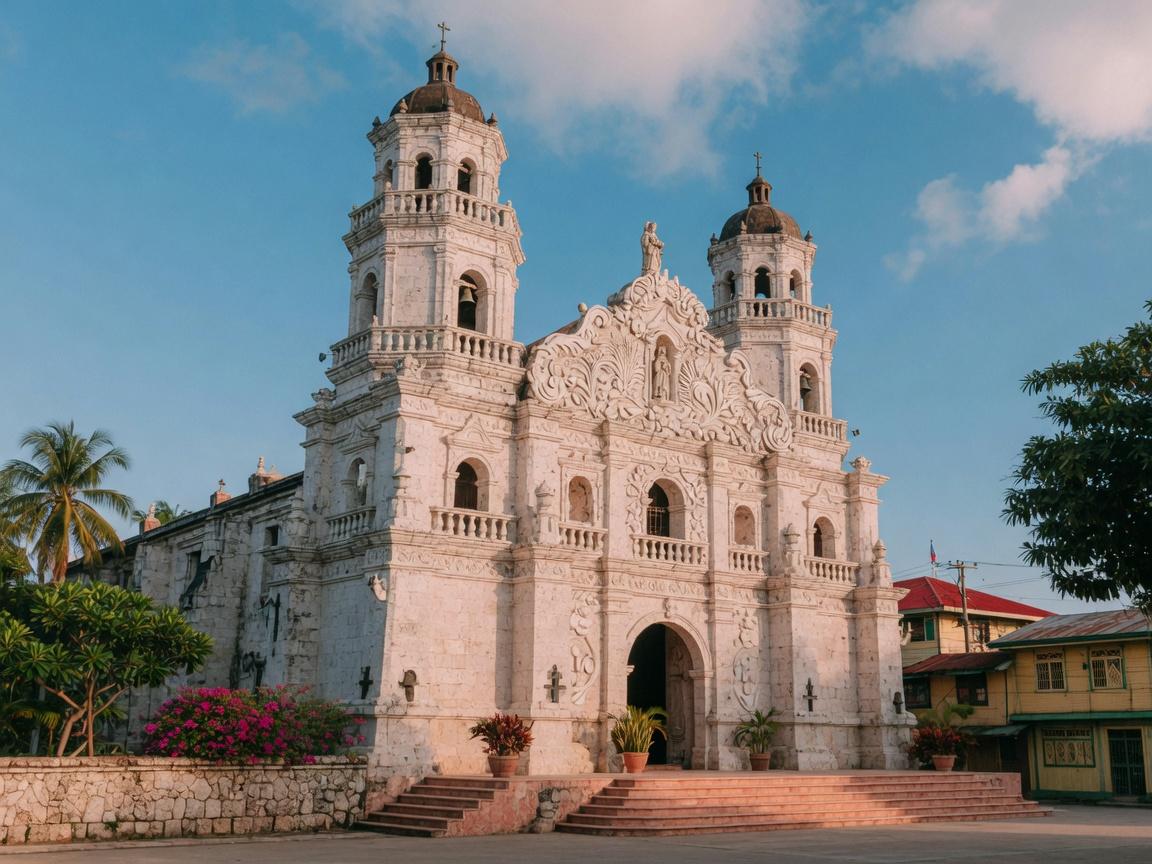
The Church stands on the highest point in the town of Miagao, Iloilo. The church's towers served as lookouts against Muslim raids and it is said to be the finest surviving example of 'Fortress Baroque'.
Ilocos Region
Unlike other town churches in the Philippines, which conform to the Spanish tradition of sitting on the central plaza, the Church with its Convento is on a hill surrounded by a defensive wall. Also unusual are the sitting of the Convento parallel to the facade of the church and that of the separate bell tower (characteristic of Philippine-Hispanic architecture) at the midpoint of the nave wall. This was dictated by the hill on which it is located.
One of the country’s most forested provinces, Apayao is divided into two distinct regions: the Upper Apayao sports rugged terrain with towering peaks, plateaus and valleys, whereas the Lower Apayao features flatlands adorned with rolling hills and plateaus. Recognized for its ecological significance, Apayao serves as a refuge for critically endangered species like the Philippine eagle.
Location
Inscribed in 2023 (18.COM) on the Representative List of the Intangible Cultural Heritage of Humanity.
Also known as the Archdiocesan Shrine of Our Lady of Consolation and Cincture/Immaculate Conception Parish of San Agustin, was the first church built on the island of Luzon in 1571, immediately after the Spanish conquest of Manila. A site within the district of Intramuros was assigned to the Augustinian Order, the first to evangelize in the Philippines.